
Pin Up Teen Patti Strategy: Q-6-4, Blind Play, and Honest EV

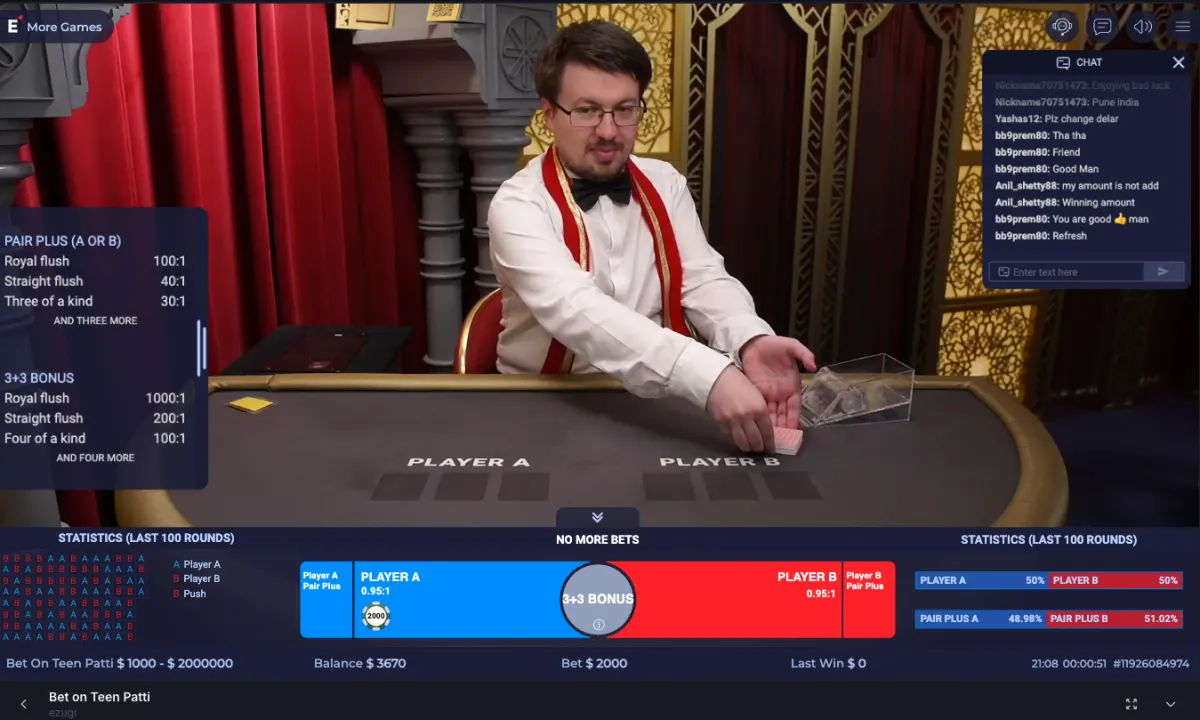
What this page is for
If your query is “teen patti strategy,” “Q-6-4 rule,” “blind play meaning,” or “how do I reduce losses,” this page is the long-form answer. If you want a magic system, this page is the wrong place on purpose.
| Search intent | What you need | Best section |
|---|---|---|
| Q-6-4 rule | Why that fold threshold matters | Q-6-4 section |
| Blind play meaning | How half-stake betting works | Blind play mechanics |
| What to do with weak hands | Simple decision filter | Q-6-4 plus bankroll management |
| How to play more safely | Session limits and unit sizing | Bankroll management |
Why I Don't Teach "How to Win"
Every teen patti search result in the first ten Google spots promises some kind of "winning trick," "best strategy," or "guaranteed hands." None of them work long-term. Teen patti has a house edge in the 2-4% range for Classic, higher for wild-card variants, and no strategy — including perfect play — can flip that edge positive. What strategy can do is reduce the rate of loss and extend session duration, which is worth something if you play regularly. This page teaches loss-reduction heuristics, not winning systems.
The framing matters. If I sell you a "system to beat teen patti," I'm lying — the math is against any system because the dealer plays by the same rules and always has the structural edge. If I teach you the Q-6-4 fold threshold, I'm giving you a mathematically derived starting-hand filter that reduces the number of negative-EV hands you play, which preserves bankroll. Same game, different honesty.
The Q-6-4 Rule (Classic Starting-Hand Threshold)
What the Rule Says
Q-6-4 is a starting-hand heuristic for Classic teen patti: if your three dealt cards are worse than Queen-6-4 (in high-card terms), fold before betting beyond the ante. "Worse than Q-6-4" means any three-card hand whose best arrangement ranks below Q-6-4 in the standard high-card ordering. A hand like 3-6-9 of mixed suits is worse (9 is the highest card); a hand like K-5-2 is better (K is the highest card). The rule is a fast mental threshold that catches most of the genuinely weak hands and folds them before the ante is compounded by additional raises.
Why Q-6-4 Specifically
The Q-6-4 threshold isn't arbitrary. It comes from combinatorial analysis of Classic teen patti hand matchups against the dealer's expected random hand. Across many hand simulations, hands below Q-6-4 lose to the dealer's hand more often than not — enough to make the expected value of continuing in the hand negative. Hands at or above Q-6-4 have a more balanced outcome distribution where continuing makes sense. The exact Q-6-4 boundary is a good rule-of-thumb approximation to the true break-even point, not the true point itself, but it's close enough to use mentally at the table.
Limits of the Rule
Q-6-4 applies cleanly to Classic. It doesn't translate directly to wild-card variants (AK47, Joker) because wild cards reshape hand frequencies — a hand that would be below Q-6-4 in Classic might be playable in AK47 because a wild card can transform it into a premium hand. Don't apply Q-6-4 to Muflis either, because the rankings are inverted and "below Q-6-4" means something different when lowest hand wins. Use Q-6-4 for Classic play at the live Playtech table; for variants, see the variant-specific strategy notes below.
Blind Play Mechanics and EV
How Blind Play Works
Blind play means you place bets on your hand without looking at your cards. Typically your bets are reduced to half the seen-bet size as compensation for the information disadvantage. The game mechanics allow you to continue betting blind for as many rounds as you want, or to switch to "seen" by looking at your cards (after which you must bet seen amounts).
The Neutral-EV Tradeoff
Mathematically, blind play is approximately neutral against seen play. You pay half the stake but make random decisions rather than informed ones. On average the information advantage and the stake saving cancel out. Blind play doesn't increase or decrease your expected loss rate — it just shifts variance because your bet sizing and your decision quality move in opposite directions. This is why blind play is primarily a psychological or entertainment choice rather than a strategic one.
When Blind Play Makes Sense
Blind play makes sense when you want a lower-stakes entry into the hand and you're comfortable with randomness. Some players use blind as a "try before you commit" mode: play blind for one round, then look at cards if you're still interested. Others play blind for the theatrical reveal. Both are fine. What blind play is not: a way to win more frequently. The math is neutral.
Apply Q-6-4 at the Hindi table.
Open Pin Up →Quick decision table
| Situation | Recommended action | Why |
|---|---|---|
| Your Classic hand is below Q-6-4 | Fold | Lower-value hands are the main negative-EV leak |
| You want lower-stakes participation | Try blind play | Lower entry size with a neutral-EV tradeoff |
| You are still learning | Use demo first | Practice without pressure |
| You want a longer session | Use smaller units and a stop-loss | Better bankroll survival |
Session Bankroll Management
Unit Sizing
Bet unit sizing should be small relative to your session bankroll. A good rule of thumb: each hand's main ante should be 1-2% of your bankroll. So a ₹5000 bankroll suggests ₹50-100 per hand. This lets you absorb normal variance across 50-100 hands without busting. Higher unit sizes shorten sessions dramatically; lower unit sizes make the session feel too slow.
Session Stop-Loss
Decide before sitting down how much you're willing to lose in the session. A sensible default is 50% of bankroll — if you drop from ₹5000 to ₹2500, you leave the table. This prevents the classic loss-chasing spiral where "one more hand" turns into a full bankroll wipeout. Live teen patti's pace (50-80 hands per hour) means variance can swing sessions quickly, so predefined stop-losses are genuinely useful.
Session Stop-Win
Also decide when to stop on the upside. Many players don't think about this, but it matters: if you double your bankroll, the rational move is often to stop and bank the winnings rather than play through them. A reasonable stop-win threshold is "bankroll + 50%" — if ₹5000 grows to ₹7500, leave the table and book the win. This feels counter-intuitive because you "could win more" but it protects your session P&L against the near-inevitable reversion.
Variant-Specific Strategy Notes
Classic
Q-6-4 for starting-hand filtering, seen play by default, small unit sizing relative to bankroll. This is the strategy context where the most research has been done and where conventional wisdom matches the math.
Muflis
The Q-6-4 rule inverts. In Muflis the threshold becomes "better than 10-6-4 reversed" or equivalent — don't carry Q-6-4 over. Run your own mental simulation: if the lowest hand wins, then high cards are bad, and a starting hand like Q-K-A is nearly the worst possible. Your fold threshold shifts accordingly. Muflis strategy isn't broadly researched in English sources; apply Classic-style discipline (fold weak hands, play strong hands) with the ranking order inverted.
AK47 and Joker
Wild-card variants shift the math because wild cards transform weak hands into strong ones. The Q-6-4 threshold doesn't apply directly. Instead, count wild cards in your hand and adjust: any hand with two or more wilds is playable regardless of the other card, and any hand with zero wilds should use a higher threshold than Classic's Q-6-4 because the expected dealer hand is stronger (the dealer also gets wild cards and will make strong hands more often).
Hukam
Trump suit introduces a tiebreaker that matters on close hands but doesn't change the starting threshold much. Use Classic-style Q-6-4 with a small adjustment for trump-suit holdings: if your hand contains two trump cards, consider it slightly stronger than the raw card rank would suggest.
The Strategy Honest Truth
No strategy I teach on this page will make teen patti a profitable game for you long-term. The house edge is real and applies to every hand regardless of decision quality. What strategy can do is reduce your hourly loss rate from, say, 4% of total wagered to 2.5% of total wagered. That's a meaningful difference over many sessions but it's not "winning" — it's "losing slower." If you're reading this because you want to play better, great, apply Q-6-4 and sensible bankroll management. If you're reading this because you think there's a path to profit, please close this tab and read the responsible gambling page instead. That's the honest answer.
Practice the rule for free first.
Try the demo →